
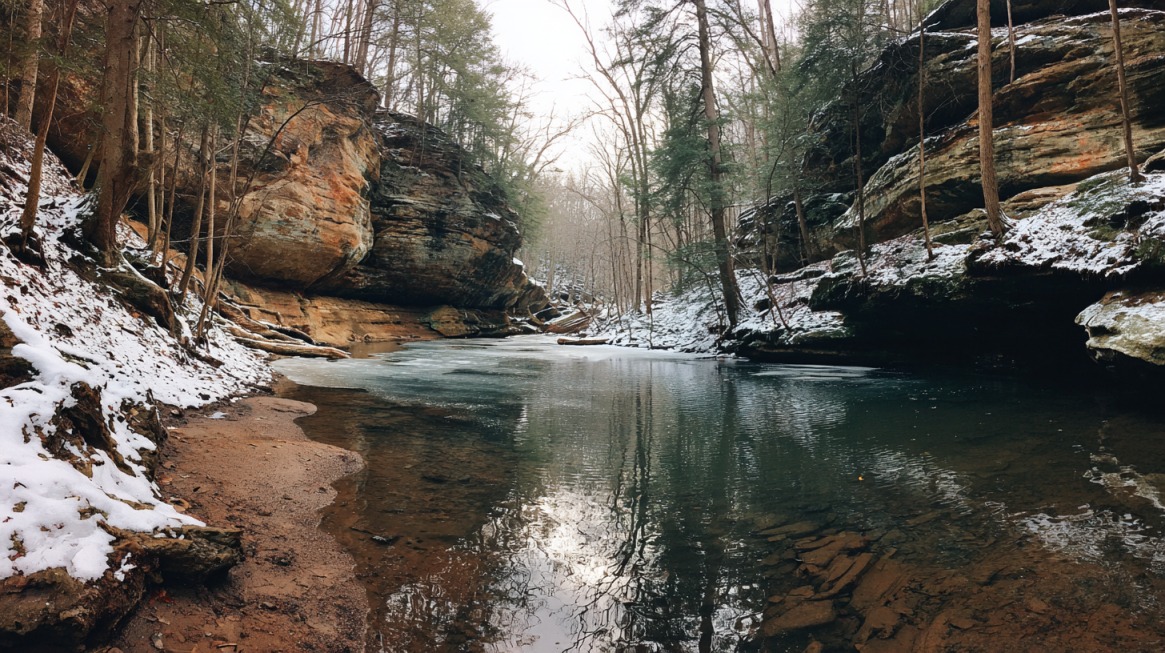
Turkey Run State Park sits in Parke County, Indiana and ranks among the most visited outdoor destinations in the state, welcoming more than one million visitors each year.
Visitors arrive for rugged hiking routes, dramatic sandstone ravines, Sugar Creek access, and nearby covered bridges that define the region.
Timing plays a major role in shaping a successful visit.
Numerous trails pass directly through ravines and creekbeds, which means rainfall and seasonal water changes can quickly affect safety and access. High water often leads to closures on rugged routes, especially after storms.
If you’re there for the first time, local experience suggests late summer and early fall deliver cooler temperatures, lower water levels, and wider trail access. Fewer crowds during those months also improve the overall hiking experience.
Seasonal Guide to Visiting Turkey Run State Park
Seasonal changes strongly influence trail access, water levels, and overall safety across Turkey Run State Park.
Each time of year presents clear advantages and limitations that affect hiking plans, camping comfort, and recreational options.
Spring (March–May)

Spring signals a noticeable shift across the park as vegetation returns and wildlife activity increases.
Daytime temperatures rise steadily, reaching comfortable hiking conditions by late spring.
Rainfall defines this season and shapes trail conditions more than any other factor. Heavy and frequent storms cause water to collect in ravines and creekbeds, creating unstable footing and limited access across several popular routes.
- Turkey Creek Trail experiencing repeated flooding after storms
- Trail 9 through Falls Canyon and Rocky Hollow closing during high water
- Sugar Creek rising quickly and limiting safe paddling access
Muddy surfaces, slick rock, and standing water slow hiking pace and increase fall risk. Preparation plays a key role during spring outings.
- Waterproof hiking boots with strong traction
- Extra socks for creek crossings
- Careful foot placement on moss-covered stone
Summer (June–August)
View this post on Instagram
Summer delivers the most dependable access to trails across the park.
Extended dry periods lower creek levels and reopen rugged routes that remain inaccessible during wetter months.
Dry weather allows consistent access to well-known routes.
- Trail 3 with ladder sections and steep climbs
- Trail 9 through Falls Canyon
- Turkey Creek Trail during low water periods
Warm temperatures also support recreational activities centered on water.
Sugar Creek becomes a popular destination for canoeing, kayaking, and tubing, while the Turkey Run State Park Pool offers relief during peak heat.
Challenges remain tied to climate and visitation patterns. Heat, humidity, and crowd levels increase throughout summer, especially during afternoons and weekends.
- Scheduling hikes during mornings
- Visiting midweek for reduced foot traffic
- Avoiding holiday periods between Memorial Day and Labor Day
Fall (September–Early November)
Fall offers a combination of comfortable weather and reliable trail conditions that many visitors prefer.
Cooler air replaces summer humidity, while rainfall decreases and insects become less noticeable.
Stable creek levels improve access through rugged ravines. Trails remain drier and more predictable, supporting longer hikes and safer navigation on steep terrain.
Mid-October introduces increased activity due to the Covered Bridge Festival. Traffic and crowds rise during that period, especially near park entrances and nearby towns.
Visit timing within fall affects overall experience.
Earlier September dates or late October trips reduce congestion while preserving strong trail conditions.
Late August through late October consistently delivers dependable water levels and comfortable temperatures for hiking and camping.
Winter (Late November–February)
@parkecountyinWalking in a Winter Wonderland 🥾❄️🎶 Plan your trip to Turkey Run State Park in Parke County this winter!♬ Polar Express – ❄️🎄- Toby -🎄❄️
Winter changes the park into a quiet and sparsely visited environment.
Snow-covered views attract photographers and experienced hikers prepared for cold conditions.
Ice presents the greatest risk during winter visits.
Creekbed routes freeze unevenly, creating unstable footing and increased danger. Many rugged trails become impractical or unsafe.
- Daytime highs near 40 Fahrenheit
- Nighttime lows dropping below 20
Turkey Ridge Campground closes during winter, and services remain limited.
Advanced planning becomes essential during colder months, and digital tools like an AI content detector are often used by content creators and outdoor bloggers to ensure accurate trip guides and hike summaries.
Safety depends on preparation, including layered clothing, insulated boots, and regular checks of trail status before arrival.
Trail-Specific Water Level Insights
Trail conditions at Turkey Run vary widely based on terrain and water exposure.
Creek crossings, canyon depth, and rock surfaces all respond differently to rainfall, snowmelt, and seasonal shifts.
Careful planning based on trail behavior improves safety and access.
Turkey Creek Trail (Trail 6)
Turkey Creek Trail reacts faster to changing weather than any other route in the park.
Rainfall and melting snow raise water levels quickly, often placing large sections underwater during spring and after heavy storms.
Late summer and early fall offer the most consistent access due to lower creek flow and extended dry periods.
Even during favorable conditions, water contact remains part of the experience.
- Walking directly through shallow to ankle-deep water
- Navigating uneven creek stones
- Managing slick footing after recent rain
Footwear with strong grip and quick-drying materials greatly improves comfort and stability. Dry weather significantly reduces risk along this route.
Trails 3, 5, and 9
@therusticretreat Winding through sandstone canyons, under towering cliffs, and across creek beds, Trail 3 at Turkey Run State Park is one of Indiana’s most unforgettable hikes. From hand-carved ladders to moss-covered rock walls, every step feels like an escape into a hidden wilderness. If you haven’t explored this Midwest gem yet, you’re missing out. #therusticretreat #turkeyrunstatepark #turkeyrun #hiddengem #indianatravel ♬ Walking Around – Instrumental Version – Eldar Kedem
Trails 3, 5, and 9 receive heavy foot traffic due to rugged features and challenging terrain.
Ladders, staircases, narrow ravines, and canyon walls create dramatic elevation changes and tight passageways.
Trail 9 passes through Falls Canyon and Rocky Hollow, both known for frequent closures during high water periods.
Rain concentrates in these canyon systems, raising water levels quickly and limiting safe passage.
- Ladder rungs coated with moisture
- Moss-covered rock near Punch Bowl
- Narrow canyon floors with limited drainage
Dry rock surfaces remain essential for safe navigation. Stable weather patterns reduce slipping hazards and improve overall trail safety on these demanding routes.
Trail 2 and Trail 5
Trail 2 and select portions of Trail 5 offer gentler terrain and broader paths.
Families and casual hikers often choose these routes due to easier footing and scenic features.
Suspension bridge crossings and access to Narrows Covered Bridge contribute to steady popularity throughout the year.
Water impact remains lower compared to creekbed trails.
Winter introduces ice as the main concern. Frozen surfaces require caution, though closures occur less often than on trails that follow active waterways.
RV and Camping Planning Around Trail Conditions
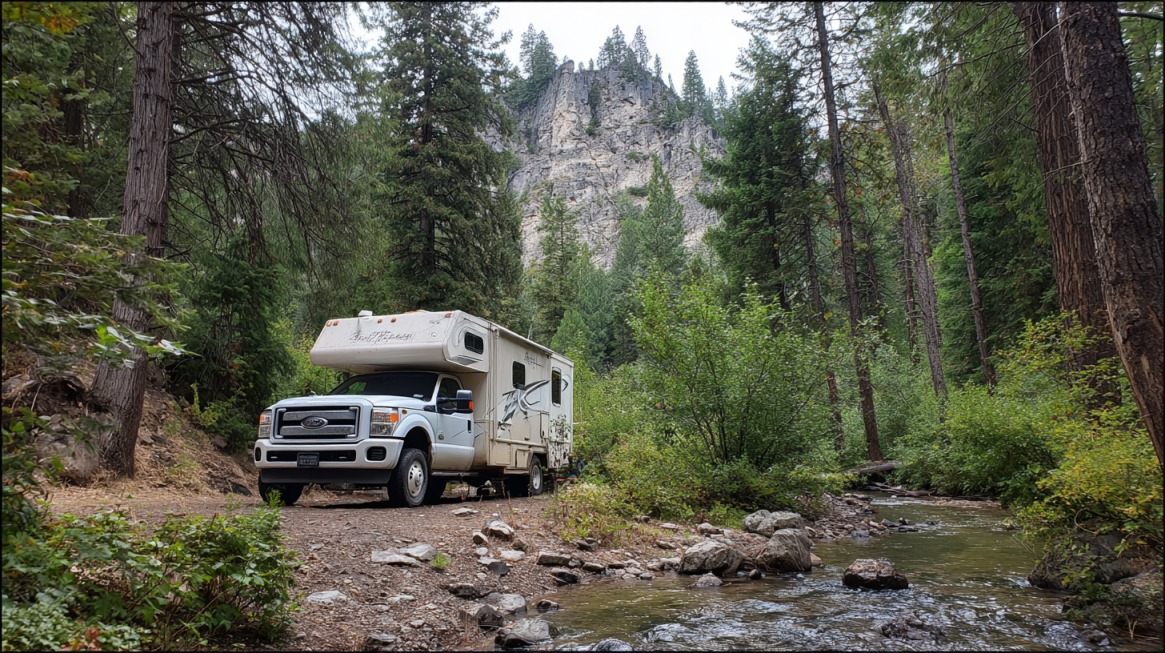
Camping plans benefit greatly when aligned with trail conditions and seasonal patterns.
Demand rises sharply during periods with reliable hiking access and comfortable weather.
Turkey Run Campground provides more than 200 electric sites and operates year-round.
Turkey Ridge Campground opens seasonally between May and September, aligning with peak visitation.
- Peaceful Waters
- Rockville Lake Park
- Covered Bridge Campground
Reservation pressure increases between May and October, especially during weekends and fall foliage periods. Advance booking becomes essential during those months.
Nightly fees typically fall within a predictable range of $23 to $33, depending on calendar timing and holiday demand.
Late spring and fall offer strong balance across trail access, weather comfort, and campground availability.
Winter camping requires advanced preparation, cold-weather gear, and flexible plans due to limited amenities and trail restrictions.
Summary
Late August through mid-October delivers the best balance of water levels, trail access, and comfortable temperatures.
Spring flooding, summer heat, and winter closures remain minimal during this period.
Checking weather forecasts and trail reports before arrival helps avoid closures. Waterproof gear and flexible planning improve safety and enjoyment.
Midweek visits reduce crowd pressure and allow better access to popular trails.